May '26
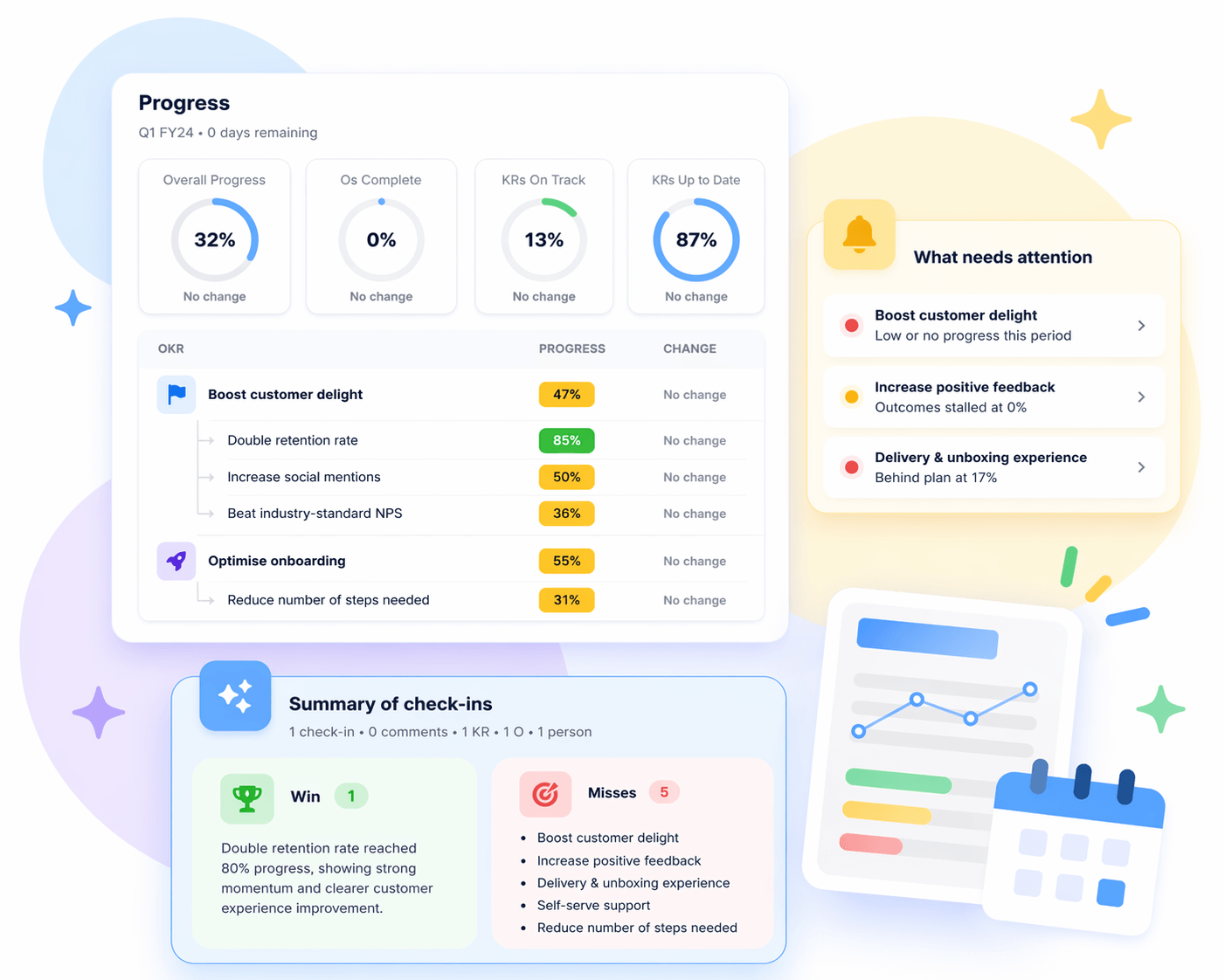
Snapshot Reporting: Weekly Clarity Without the Noise
You write OKRs at the start of the quarter, and your teams stay active. Check-ins happen, progress moves, and the Activity Feed tells the story in real time.
But not everyone keeps up that way. Some people miss the flow of updates, or dip in only occasionally. They need a fast way to catch up without reading every comment or piecing things together themselves.
That gap creates uneven visibility. Some stakeholders stay close to the detail, while others rely on partial context or second-hand summaries.
Today we are fixing that with Snapshot Reporting. This closes that gap by turning ongoing activity into a clear, periodic recap anyone can understand in minutes.
A Second Layer of Reporting, Built for Real Work
We already introduced Real-time reporting for live visibility. It answers the question: what is happening right now?
Snapshot Reporting answers a different question: what changed over the last period, and what should we do about it?
Each snapshot captures a clean, structured record of progress at a fixed point in time. You can run it weekly or fortnightly. You build a timeline of your quarter as it unfolds.
This creates a durable record that anyone can review in minutes. No chasing updates. No reconstructing context. No manual effort to pull data every time a different stakeholder asks.
What Each Snapshot Includes
Every snapshot focuses on decision-ready information. You see what matters, not everything.
1. Progress with context
You get the current state of every Objective and Key Result, along with the change since the last snapshot. This makes movement explicit. Teams can see whether they are advancing, stalling, or regressing.
2. Check-in summary
The system reviews all updates from the period and surfaces the signal, connecting the dots between teams. It highlights meaningful wins and calls out missed targets. You no longer rely on filtered or selective reporting from individuals who may not have the whole picture.
3. Priority risks and blockers
The system identifies OKRs that need attention and explains why. It points to stagnation, missed targets, or inconsistent updates. Leaders can act immediately knowing that their intervention will be high impact, instead of scanning dashboards looking for clues.
4. Process quality review
Snapshot Reporting does not just track progress. It evaluates how well your OKR system is running. It flags weak or vague Key Results, inconsistent check-ins, outputs over outcomes, and patterns that reduce clarity. This helps you improve execution, not just measure it.
All of this runs through AI so you get structured insight without manual effort.
How to Use Snapshot Reporting
It's automatic. Just configure the cadence you'd prefer, weekly or fortnightly. Then the snapshot will be generated over the weekend.
Each snapshot appears as a concise report inside your workspace. You can share it with stakeholders, review it in leadership meetings, or revisit it later. Pair it with the Presentation View for a complete review toolkit.
The workflow stays simple:
- Teams continue their normal weekly check-ins
- The system compiles and analyses the data
- You review a clear summary and make decisions
No new process. No extra admin.
Why This Changes How Teams Use OKRs
Snapshot Reporting directly addresses the failure modes that break most OKR systems.
It restores leadership visibility
Leaders get a consistent, high-signal view of progress. They do not rely on scattered updates or anecdotal reports.
It reduces performative updates
The system summarises raw check-ins, not polished narratives. This encourages honest reporting and surfaces real issues earlier.
It strengthens alignment
Each snapshot shows how work moves across teams over time. You can see whether effort ladders up to company priorities or drifts away.
It removes reporting overhead
Teams do not prepare slides or write summaries. The system produces a structured report automatically. For tips on what good updates look like when teams do write them, see how to write OKR updates that people actually read.
This is what modern OKR management software should do. It should reduce friction while increasing clarity.
Built for Teams That Take Execution Seriously
Snapshot Reporting works alongside our real-time reporting to give you two complementary views:
- Real-time reporting for live tracking and immediate intervention
- Snapshot reporting for periodic catch-up clarity and historical context
Together, they form a complete OKR tracking system. You get both immediacy and continuity.
This is especially valuable for teams running fast cycles, distributed teams, and leaders who need reliable signals without constant check-ins. If you want to learn more about running effective reviews with this data, read how to run leadership OKR reviews.
In Beta, and Improving Fast
Snapshot Reporting is now available in beta.
We are actively refining how the system identifies risks, evaluates quality, and summarises progress. Your feedback will directly shape how this evolves. Please let us know how it's working for you.
Start Using Snapshot Reporting
If you already use OKR Dash then you already have it. Check your Snapshot Reports tab to see the latest reports.
If you are evaluating OKR tools or looking for a better OKR platform, this is a good moment to try it.
Create your account now and see how it feels to run OKRs with clear, consistent visibility.